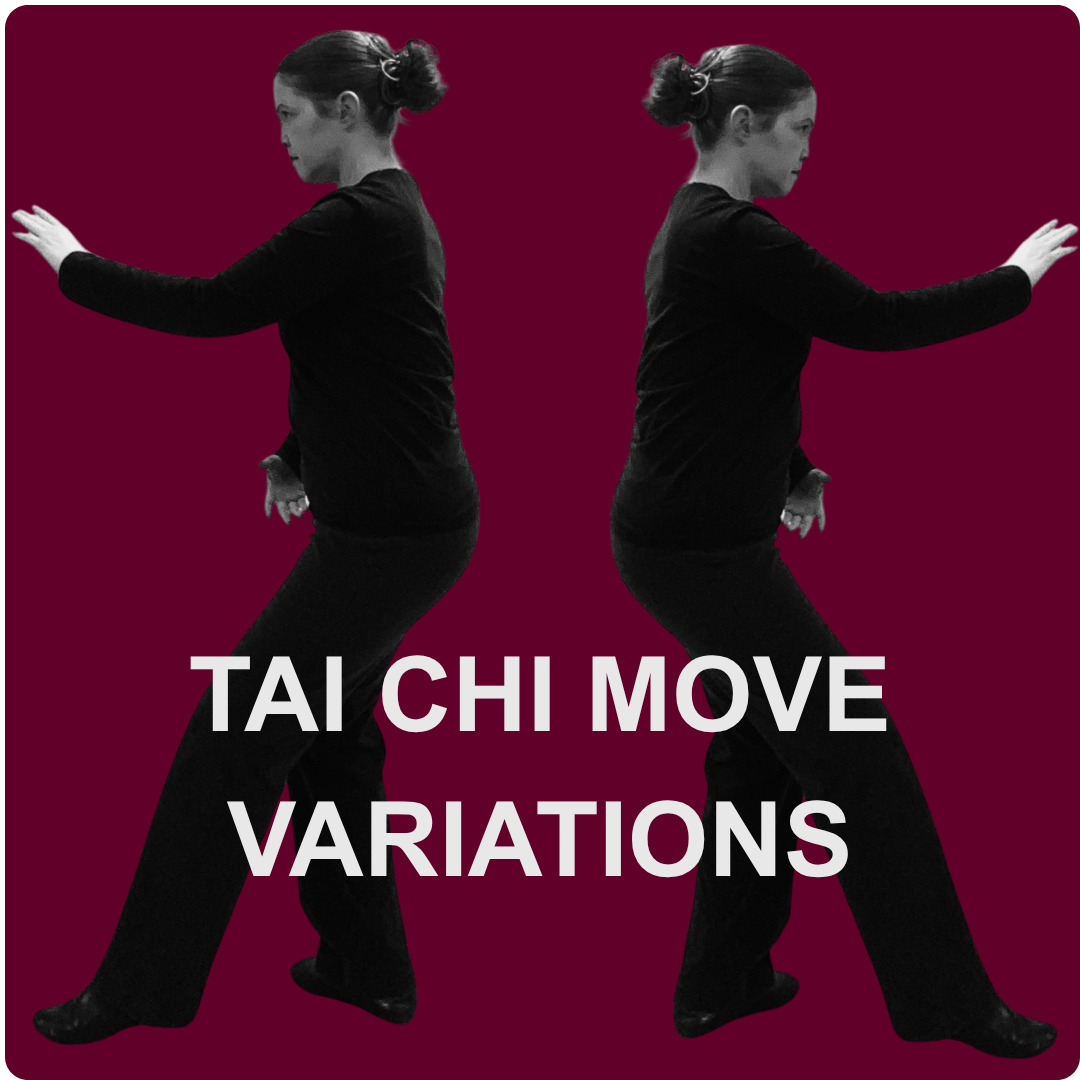
Tai Chi move variations: choose your battle
Lately, I’ve been thinking about the move “Repulse Monkey”. Because my current teacher does it differently from my previous teacher. I asked questions, I researched, I thought about it, and I think one of the reasons for Tai Chi move variations is simply this: choose your battle.
Let me explain with an example from the playground. If you don’t have kids, stay with me, it’s a short example.
Imagine sitting at a playground right before lunchtime. A mother hands her child a banana, dipped in chocolate. From the sidelines, other parents roll their eyes and make snarky comments: why would she give her child that now, right before lunch, the kid won’t touch their vegetables. But maybe that mother has a long car ride ahead and knows it’s either a chocolate-dipped banana now or hangry screams from the car seat later. She chooses the banana. That’s what parents say: choose your battle.
Looking from the outside, we rarely know what’s really going on. We don’t see the battles someone is fighting.
Repulse Monkey and varying looks
Now let’s get back to Taijiquan, specifically Repulse Monkey. This is the variation I noticed:
- One of my teachers keeps the eyes towards the front hand.
- My other teacher turns the head and looks towards the back hand.
I wondered: who is right?
I know why each teacher looks to the front or the back. One says the opponent is in front of me and that’s where to look. The other says the opponent is behind me and I need to look where the arm swings. Both teachers are clear about what they want to do. They are clear about where the opponent is. They choose their battle.
Which teacher is right? There is so much talk about right and wrong in Taijiquan. There are so many people online picking apart other people’s videos, rolling their eyes, and making snarky comments. But Taijiquan is an internal martial art. Sure, good external structure matters and it’s hard to draw the line of what’s completely wrong. But I think it’s important to look at the inside first: the intention.
So besides the question of where I look, the real question is: where is my intention? In the case of Repulse Monkey that means: Choose your battle, and then move. It’s not wrong to keep the eyes to the front, it’s not wrong to turn the head, but it’s not Taijiquan without intention.
Let’s see what the old masters have to say about this. I found this song-poem:
The Song of Holding the Center in Self-Defense Training
The feet must be rooted in the posture Central Equilibrium.
First understand the four cardinal directions, advance and retreat.
Ward-off, Roll-back, Press and Push require four hands to practice,
And a great deal of effort must be expended to grasp their true significance.
The body, form, waist and crown of the head must all be brought into play.
In sticking, adhering, joining and following, the mind and chi are rulers.
The spirit is the ruler and the flesh and bones are subjects.
Clearly understanding all aspects of our art,
We will naturally achieve perfection in the martial and the civil.— by Shen Chia-chen, in T’ai Chi Touchstones: Yang Family Secret Transmissions by Douglas Wile, p. 89*
This text is nearly a century old, and though times have changed, the principle remains the same: Make up your mind and then move your body.
And this is not only about Repulse Monkey. Just take the Beak Hand, for example: there are at least four ways to do it. There are many Tai Chi move variations.
But the basic principles apply to all of us: Your mind rules, your flesh and bones follow.
So try this next time you practice Repulse Monkey: choose your battle first, then move.