
Tai Chi anatomy explained? A book review of “Anatomy of Fitness: Tai Chi”
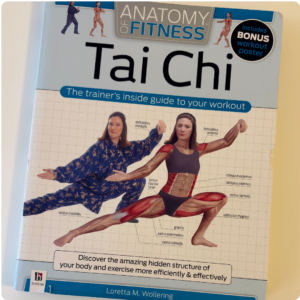
I bought this book because it looks different. No old Chinese man on the cover, but a muscular drawing. That made me curious.
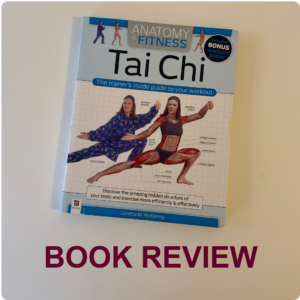
Inside Anatomy of Fitness: Tai Chi* by Loretta M. Wollering, there are Tai Chi anatomy drawings for many moves, with comments and tips around them.
I find that the book is good to open at just any page. You don’t need to read it from beginning to end. I pick it up, browse a bit, and put it back on the shelf.
Who the book is for
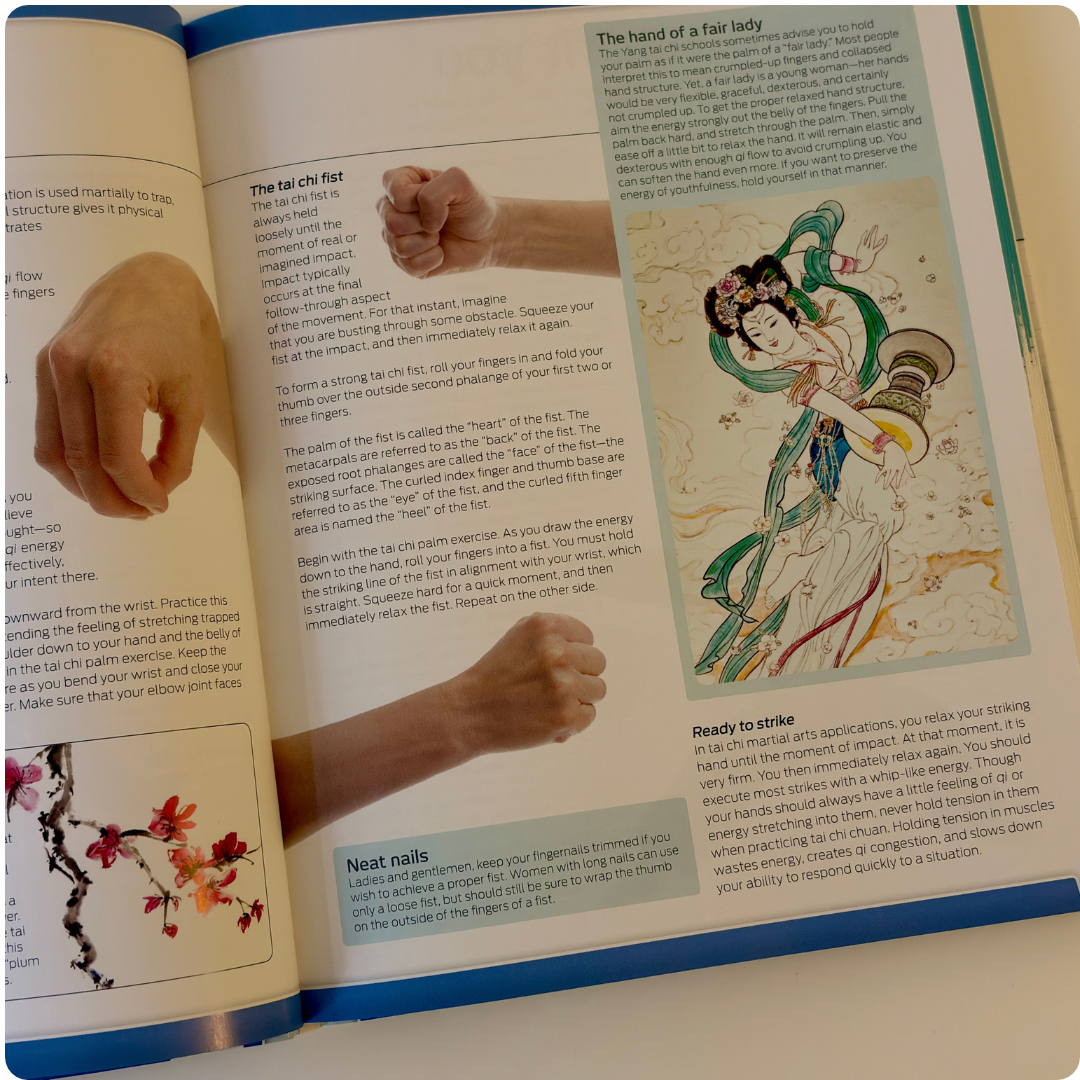
The book covers the 24 form, but also some moves from Chen style and a few others. It is good for beginners, because it answers a lot of questions. And even advanced students will find many nuggets. For example, there is a section about what “the hand of a fair lady” means. There is also a page dedicated to knee pain, which is a common problem and not often discussed.
I think it would make a great book for the waiting or wardrobe area of a Taijiquan school. Something to flip through while you wait for class to start. Or just keep it as a coffee table book.
Where the Tai Chi anatomy drawings fall short
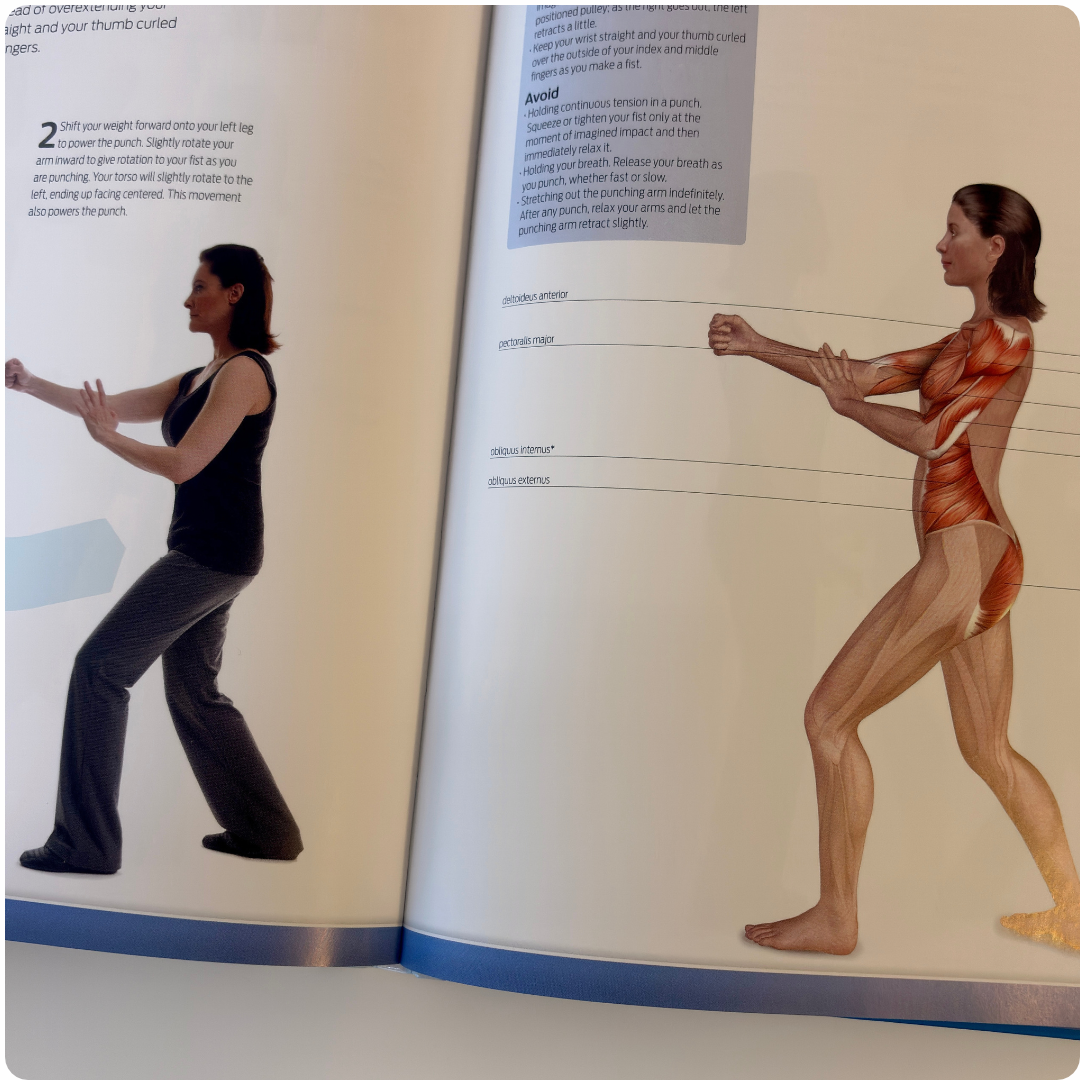
I like the little comments and tips. What I find confusing are the actual anatomical drawings. I am not sure where the muscle focus for the drawings comes from. How did Loretta Wollering decide on those muscles? But maybe I missed that in the introduction. Still, it is interesting to think about each move and which muscles to use and which to relax.
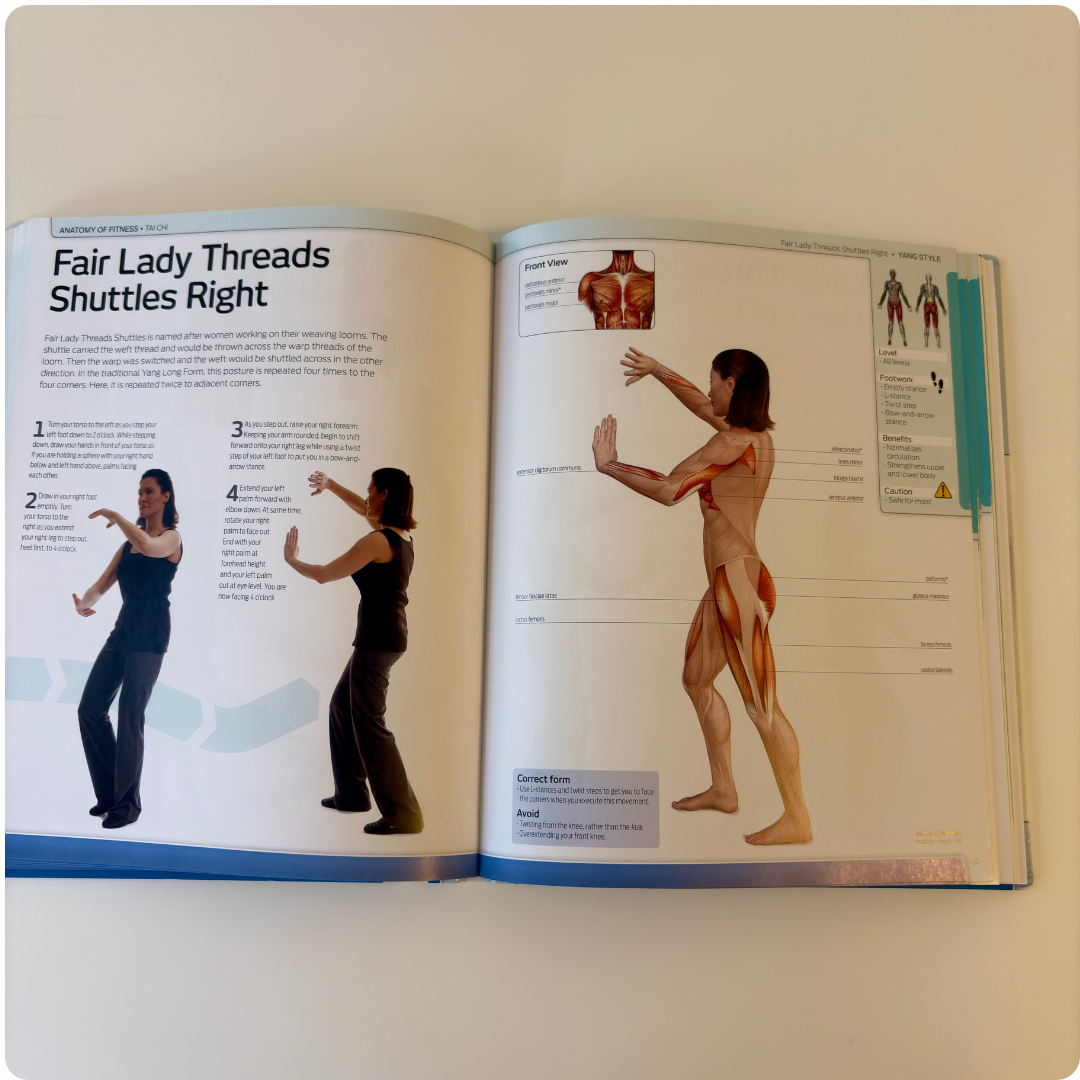
I also think that the drawings do not reflect how the lower back straightens. I am not sure if the illustrator (Hector Aiza) understands Tai Chi and how the back is positioned. But that is a very tiny detail.
Why it stays on my bookshelf
Even though the book has minor shortcomings, overall I like to keep it on my bookshelf. Because whenever I open it, I always find something to think about for my movements. Like this little nugget:
Hip versus kua: In tai chi chuan there is much mention of the pelvis and hips. The Chinese concept of “hip” is different than the Western concept. In the West, we think of the hip as the outside edge of the pelvis and thigh. But in the Chinese concept, it refers to the inner areas of the hip—the creases that form the V where the torso meets the thighs. The anatomical name for this is the inguinal crease. The Chinese word for this is the kua.
A short section, but exactly the kind of thing that stays with me when I practise the next time. It’s those little details that fascinate me, as you can see in my own blogpost about the 4 ways to make the beak hand (Gōu Shǒu).
So if you would like to add a book on Tai Chi anatomy to your library, check out Anatomy of Fitness: Tai Chi*.
Happy Qi!
Angelika