
Adding Taijiquan to your Qi Gong practice: is it worth it?
Last weekend I attended an online conference organised by the Immortal Sisters of the Tao (a foundation that supports women in Qi Gong and Taijiquan). I enjoyed being in this space so much. To be with other women who have been practising for decades and who love their practice deeply. The call was about Qi Gong, and we briefly touched on something I would like to explore here: if you only do Qi Gong, should you be adding Taijiquan to your Qi Gong practice?
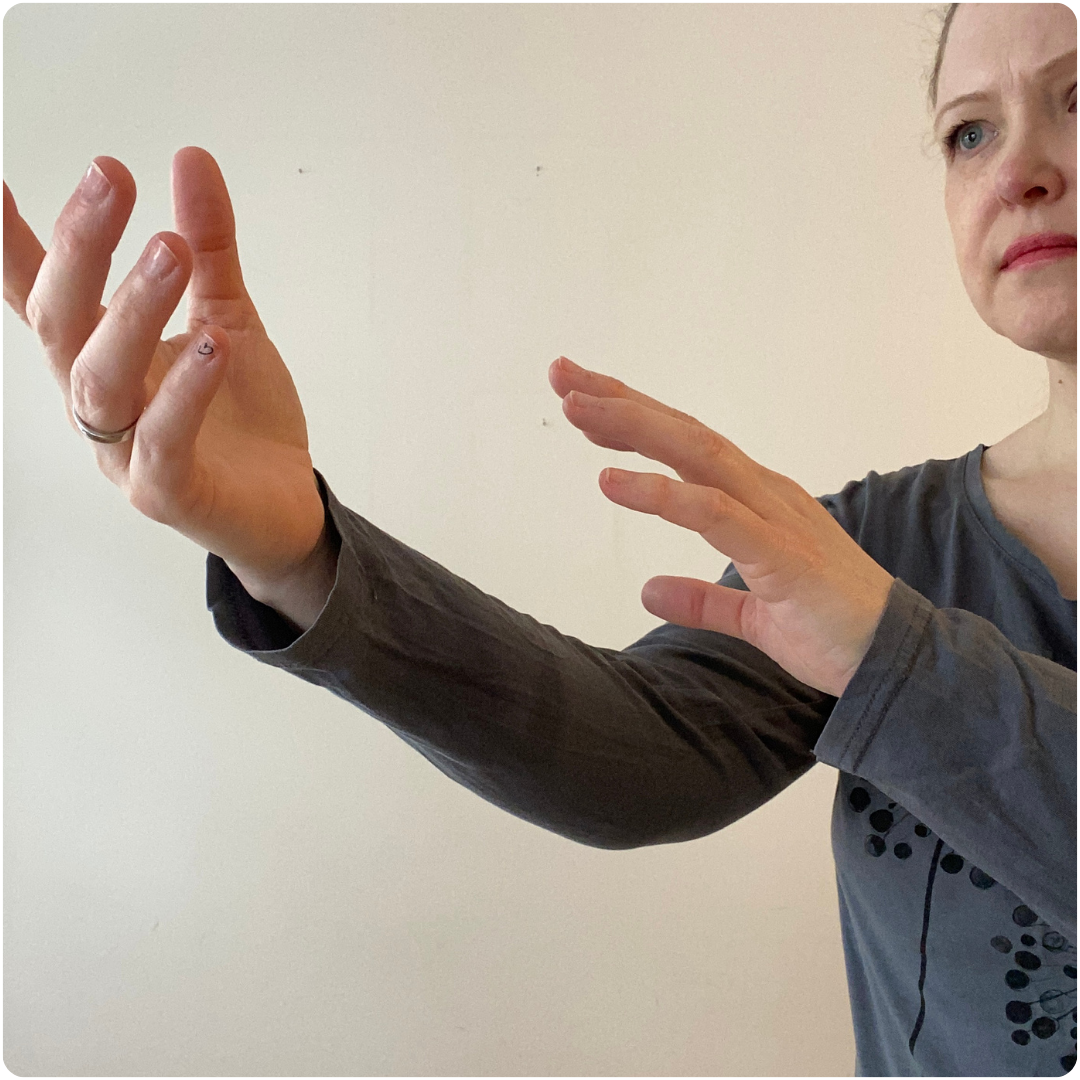
My short answer is: you don’t have to. Qi Gong is wonderful on its own. You can benefit from the nourishing moves, and it is good for your health. But Taijiquan has two qualities that Qi Gong doesn’t offer in the same way. So let me give you a longer answer:
Adding Taijiquan to Qi Gong practice: the art of relating to others
Qi Gong is something that is just about myself. My breath, my body, my energy. And it’s good to focus on oneself. Especially for women, as we spend so much of our lives taking care of others. We do need time to take care of ourselves. But Taijiquan adds a dimension to that. It includes other people without having to take care of them.
Taijiquan is shadow boxing. I practice mostly alone, yes, but every movement has a partner in mind. Every shift of weight, every opening and closing of the arms, is a conversation. And in push hands (Tuī Shǒu), the two-person practice of Taijiquan, that conversation becomes real. I learn to feel another person’s structure, their intention, their weight. And I learn to respond without force.
That is what makes Taijiquan so interesting to me. It is not about winning. It is not about being stronger than the other person. It is about holding my own space, my own centre, while staying connected to someone else. Gently. Without aggression. I can remain a peaceful person, even in a conflict. I think that is a skill worth practising.
The long game: form, depth, and attention span
The other thing that makes Taijiquan special is how long it takes to learn. Most forms take at least a year to get the basics. A long form like the 108 form takes several years just to learn the choreography. And then the refinement begins. Qi Gong is much easier to start, because many of the movements are simple and can be learned quickly. Taijiquan asks for something different: it asks me to stay.
I find that increasingly rare and increasingly valuable. We live in a time of shrinking attention spans and doom scrolling. Learning a Taijiquan form is the opposite of that. It is a commitment to something slow, something deep, something that reveals itself only over time.
And here is the thing: if you already do Qi Gong, adding Taijiquan to your practice is not as intimidating as it looks. You already know how to move slowly. You already have a relationship with your own body. That is actually the perfect foundation. Taijiquan is not a leap into the unknown. It is more like a natural next step.
So if you are a Qi Gong practitioner who has ever been curious about Taijiquan, I would say: follow that curiosity. You don’t need to commit to anything yet. Just try a class. See how it feels. The slow movements will feel familiar, and the depth that is waiting for you there might surprise you.
Happy Qi! Angelika