
Why is Tai Chi not more popular? A reflection on Taijiquan in media and community
I recently read a novel about a Japanese bookshop. And I found this passage:
“When I went outside, I saw Momoko standing in the middle of the yard, drenched in morning light. She was still wearing her yukata from last night, but she was in a funny pose. ‘What’re you doing?’ I asked. ‘Tai Chi,’ she said. She told me it had been a morning routine for years. ‘It’s really good for your health. Plus it makes you feel good. Want to try it with me, sleepyhead?’ I’m sure the sight of a middle-aged woman doing Tai Chi in front of a second-hand bookstore surprised the businessmen on their way to work. Just imagining it made me almost burst out laughing.”
— Days at the Morisaki Bookshop by Satoshi Yagisawa*
And this started so many thoughts in my head. The narrator recognises Tai Chi immediately. Knows what it is. Even finds it charming. And yet the reaction is laughter, not curiosity. Not “I want to try that.” I wondered: why is Tai Chi not more popular?
Taijiquan is everywhere in media
Taijiquan keeps showing up in movies, TV series, and music, and audiences always seem to know what they are looking at. From Patrick Swayze practising shirtless in Road House to Robert De Niro’s character finding balance in The Intern. From a Rolling Stones music video shot in New York City to an entire album Lou Reed created specifically for his Tai Chi practice. (You can find my list of Taijiquan in movies and TV series and Taijiquan in music here.)
What strikes me about these appearances is that Taijiquan is consistently shown as something calming, balancing, and good for you. Even when it is used in cartoons, there is an underlying message: this is a practice that brings calmness, balance, health. People seem to understand that, even if a scene does not always show the full depth of what Taijiquan actually is.
A strong brand with a conversion problem
Taijiquan has something that most health practices can only dream of: universal recognition. You do not need to explain what it is. You do not need to demonstrate it. Almost everyone, everywhere, knows what Tai Chi looks like and associates it with something positive. From a purely practical perspective, that is an extraordinarily strong starting point.
And yet, despite this recognition, very few people actually try Tai Chi. I am not the only one who talks about this. Bruce Frantzis of Energy Arts wrote about this as far back as 2009, talking about the “tipping point” that Taijiquan has never quite reached. Sifu Anthony Korahais of Flowing Zen argued in 2016 that Qi Gong will eventually be bigger than yoga. Both articles are still relevant today. And still, the tipping point has not happened. People recognise Taijiquan, and still do not try it.
So what is stopping people?
I think there is not one answer to that. But it is a combination of different factors.
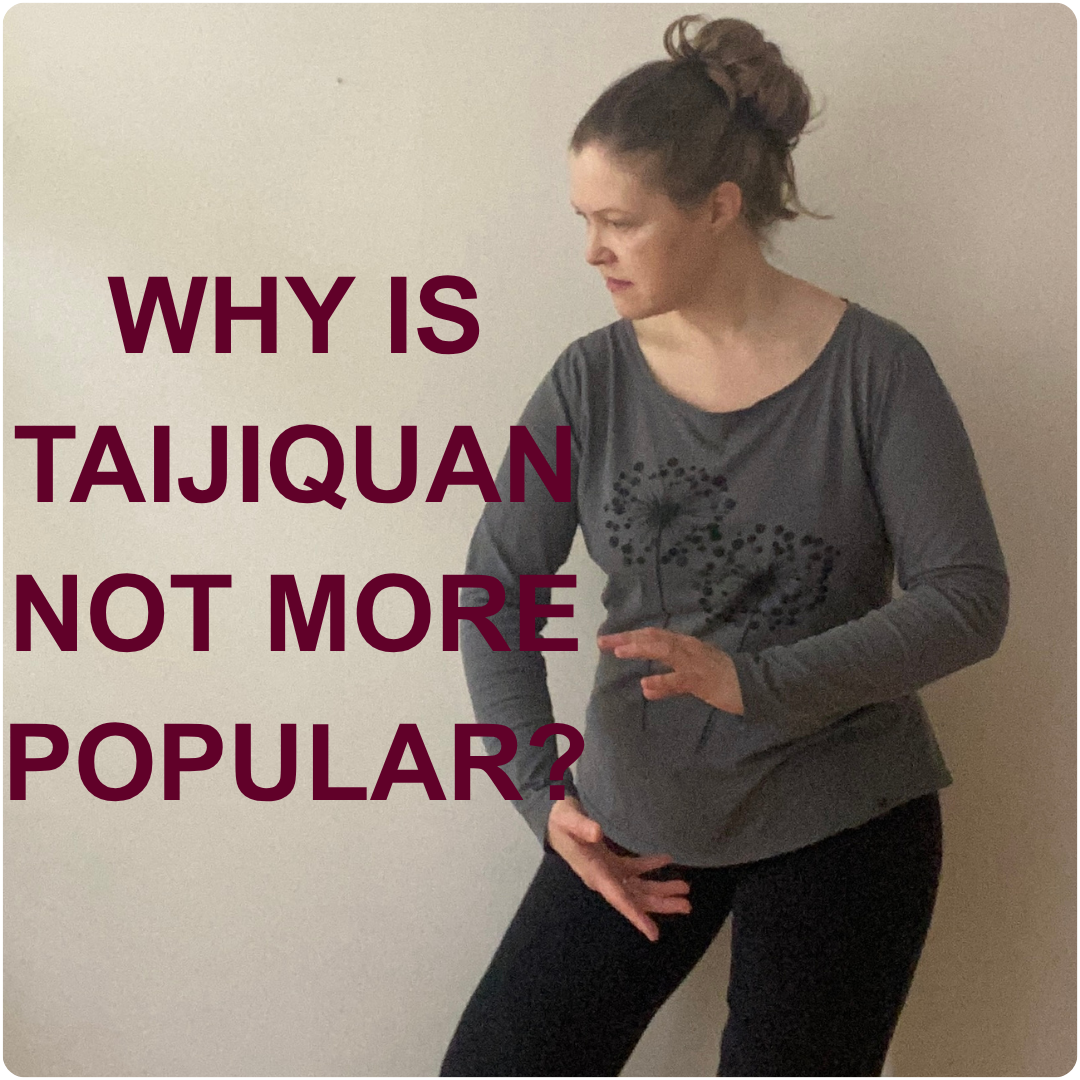
One part of the answer is logistics. There are simply fewer Taijiquan teachers and schools than yoga studios. If you live outside a big city, finding a class can already be a challenge. But I do not think logistics is the main barrier. Because even people who could find a class often do not go.
In addition, Taijiquan looks complex from the outside. That long form. Those slow, deliberate movements. People who have been practising for years make it look effortless. It can feel like something you need to already be good at before you even start. Social media makes it worse. We see perfectly executed forms and beautiful slow movements. Nobody posts their first wobbly class. So the bar looks impossibly high before you even begin.
Add to this the impact of our fast-paced lives. We are living in a world of instant gratification. Our attention spans are shrinking. And Taijiquan asks for the exact opposite. It asks you to slow down. To be patient. To stay with something that does not give you immediate results. People struggled with that already 20 years ago, when I started. Now it is getting even worse.
So a complex, slow, time-consuming practice is hard to sell these days. Which is so frustrating, because Taijiquan is one of the best answers to this problem. Meditation in motion is not only a mental thing, it brings you back into your body too. The very thing that makes Taijiquan hard to start is also what makes it so valuable.
Also, Taijiquan is associated with older age, not personal transformation. People file it under “I will do that someday.” Not “this could change my life right now.”
I ask myself: Is the Taijiquan community modern enough? Not modern as in creating Tai Chi TikTok dances. Modern as in attitude. How we treat each other. How open and welcoming we are to people who do not fit the traditional mould. Taijiquan is still very much a patriarchal system, with the family style men at the top. I wonder if that puts people off. Especially younger women.
Going through all these thoughts, it amazes me that anyone practises Taijiquan at all, haha!
A question for all of us
Now let’s get back to solutions. How can we get more people to try Taijiquan?
I do not have a simple answer. I know a lot of those reasons cannot be influenced easily, like the logistics or social media. For decades, individual teachers thought about free classes, shorter forms, better marketing. I am not sure if that is the answer.
Thinking about how to get more people into classes, I wonder: how welcoming are we as the Taijiquan community? How welcoming are we to new students? Not just in words, but in practice. Does a complete beginner feel comfortable walking into our classes? How do we talk about Taijiquan to the people around us? How do we represent this practice to the outside world?
And it’s not only about making Taijiquan easier to start with, to make the classes more welcoming. It’s also about showing that Taijiquan can make a difference. Maybe it is necessary to talk more about how life changes when you start practising Taijiquan. Not in the spiritual, energetic, high level way. But on a very practical level.
For me, it’s that I am in less pain when I practice daily. I just feel better. Maybe I need to talk about that more often.
So I do not have an answer to all my questions, why Taijiquan is not as popular as it could be. But I want to start a conversation about this. Feel free to send me an email, if you want to talk about this!
Happy Qi!
Angelika